Showing posts with label teach. Show all posts

Monday, September 19, 2011

Posted not tweeted!

Apologies for those of you who were searching for the LoFat twitter updates today. LoFat was unfortunately unable to provide real-time tweets of the dietician training, so I will give you a brief overview! Today's focus was on how to approach, motivate and succeed with teenagers in regards to health. 


We need to first think about the real differences between young children and teenagers. One important difference is that with physical growth comes changes in hormones and metabolism. Those changes influence body image and mood. Another change is age, and with age comes increased expectations and responsibilities. A very important difference is social. Teenagers are motivated, demotivated, enabled and disabled by the social environment. The parental influence is important, but it ceases to become a motivator. Teens want to feel accepted by peers and want to feel "normal" according to the larger social circle. 

Knowing these difference and really understanding their implications helps us identify ways to motivate and inspire teenagers to succeed in a healthy lifestyle:

  • By empowering teens to understand and take control of their body, they become more independent and thus successful.  Teach them about their body, how BMI works, muscle VS. weight gain/loss, etc. 
  • Aid them in finding fun ways to move and exercise.  Exercise does not mean treadmill; paintball, bowling, swimming and many more can be options. 
  • Educate them on making healthy food choices when they are dining out. 
  • Teach them to read the labels and look for healthy recipes. 
  • Help your teenager identify and establish a "buddy system". By that I simply mean having another friend or family member go through all or part of the experience with him/her. 
  • Be flexible! Allow a free day for example.  
  • Do not compare.  Each child is different.
  • Rewards should not be with food.  An experience-based reward or more privileges are good examples.


I will add one note that is specific to parents, and I hope you can accept it from me... If you are a healthy role-model, your child will eventually learn from you.  Do not expect change, if you cannot model that change.


As an adult in the teen's life do be aware of how you approach the topic of weight loss. Focus on gaining a healthy lifestyle rather than losing weight. The dangers of unhealthy body image, eating disorders (anorexia, bulimia), and yo-yo dieting are severe. If you do suspect that your teen may be exhibiting signs of depression, anxiety, obsessive and/or disturbed behavior and mood swings, do consult with a therapist.

Monday, September 12, 2011

To fight or not to fight?


One of my favorite health blogs, is National Public Radio's (NPR) blog,  SHOTS.  An article entitled "Pediatricians Put The Kibosh On Boxing", caught my attention.  It explained the dangers of boxing as a sport for kids.  The writer noted:

Citing the risk of injuries, including concussions, the American Academy of Pediatrics and its Canadian counterpart, the Canadian Paedeatric Society, have come out in opposition to boxing as a sport for children and adolescents.  Pediatricians should strongly discourage parents from letting their kids box and suggest sports "that do not encourage intentional head injuries," says a new policy statement from the two national groups for pediatricians. (link)


One might wonder, does that mean all combat sports are bad?  

There is never a right or wrong answer because these things are relative; it depends on how the sport is taught, which combat sport it is, what the child is like (aggressive vs. calm), the child's age, the guidelines established at home, the instructor's methods, etc.  I would argue, however, that the critical point here is intent.  Sports like taekwondo and Karate are fighting/combat sports, but many instructors focus on the self-discipline aspect, and do not encourage fighting aimlessly.  Boxing and wrestling, at least in my eyes, seem to carry the intent to harm, and children watching and practicing these sports, tend to act-out the sport more often. 
There is merit to some of these combat sports.  Children can build strong self-esteem and courage based on the experience.  With martial arts, many instructors focus on discipline, and an understanding of the body and mind.  They teach children to think before they act.  But the fact remains that it is a form of fighting, and some children are encouraged to rough play at home with their siblings and sometimes fathers.  Without proper guidelines, these children may transfer these lessons to the schoolyard and classroom. 


What are your experiences?  


Saturday, September 10, 2011

Disciplined... Part 2

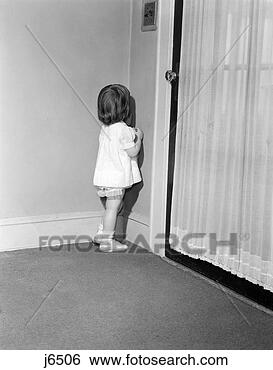
Misbehavior, rule breaking and/or tantrums are an inevitable part of growing up. Sometimes it is an attempt (by the child) at gaining control; an attempt at mastery. Other times it is an experiment of "what will mama/baba do".  This can be intentional, as we can see from the video below, or not.  This post is targeting intentional and repetitive attempts by your child to misbehave.

With teenagers it is no different. They may not lie down on the floor and scream, but they still seek attention, experiment with breaking the rules, and seek ways of expressing that they have grown, and that rules may need to change.  This might be a time when renegotiating the rules is helpful.

As aforementioned in the previous post, structure and discipline are necessary. Discipline is not just about rewards, nor is it only about punishments. We need to start with having a set of rules and guidelines for our children to follow, we then need to be role models. For younger children these rules have to be short and clear; and we need to keep a reminder of these rules.  We should remember to use positive reinforcement when our children are doing well. When they are not, we give chances (or warnings) to allow them to correct their mistakes. If our child is being stubborn, we use punishments, or as I would rather say, consequences to teach them discipline. (I will use punishment in this post because it is more familiar and recognizable).


Punishments/ consequences:

  • Punishments, like rewards, need to be immediate. (i.e. Do not punish a behavior exhibited at the beginning of the week, by taking away something on the weekend).  This can be an exception with teenagers, who are able to wait and you may postpone a punishment.
  • Punishments need to be short. Elongating punishment will only decrease its effectiveness. (i.e. take away the game for an hour instead of a week).
  • Punishments need to be age-appropriate. (i.e. Time-out for younger kids vs taking away privileges for older children).  Please use the term "thinking chair" instead of "naughty chair".  Remember we are trying to promote positive thinking and behavior.
  • Talk to your child not at your child.  Try to kneel down and maintain eye contact.
  • Clarify that you are punishing the behavior and not the child.  Show your child love even in those tough moments.
  • For educational, safety and emotional reasons I will have to mention that I am adamantly against corporal punishment (physical punishment).  This is always a sensitive topic, especially in this part of the world.  As the cartoon below shows, it only teaches the child to be aggressive, and to avoid an act out of fear, and not conviction).
Corporal Punishment


·
      This video might make you laugh, break your heart, or allow you to sigh and say "yippee! Its not only my boy who does that!"...  It does, however, show us that intentional and manipulative behavior starts at a very young age.

Thursday, September 8, 2011

Disciplined... Part 1


Structure is an essential part of a child's development.  It allows the child to have a sense of predictability and stability which nurtures his sense of security.  Rewards and punishments teach the child about consequences of actions, allowing the child to act after consideration rather than impulsively. Establishing rules and guidelines may be difficult in the beginning, and here are some tips about one aspect of discipline:

Rewards

Rewards should be immediate.  A reward far off in the future is neither enticing nor motivating.  Children can tolerate and should tolerate waiting, but creating a token system for a future reward is more effective than a verbal promise. (i.e. collecting point, stickers, etc).

For younger children explain very clearly why the reward was given, the more specific you are, the more likely it is that the child will repeat that specific behavior.

Do not assume the child has not learned if s/he does not repeat the rewarded behavior.  Consistency, repetition and persistence are essential, especially when dealing with special needs children.

Use one-on-one rewards when targeting embarrassing or personal goals. (i.e. age inappropriate toilet training, hygiene, relationship problems).   

Try to be creative with your rewards.  Find activities and experiences that you can reward with, rather than focusing on materialistic rewards. For example, 15 minutes of one-on-one play with your child (a game of their choice), allowing them choose their favorite dish for dinner, bake cookies, or make popcorn and watch T.V. together.  For bigger rewards, these could include organizing an outing, having friends over, or allowing them extra privileges.    

Express your love and pride for your child generously


Tuesday, September 6, 2011

A heavy weight...


I had a lovely meeting this morning with Abdullah Al-Eisa, the CEO at LoFat.  I was asked to help work on improving their LoFat Juniors program.  Abdullah's vision is very much directed towards awareness and public education about the real dangers of obesity. In doing my pre-meeting research, I found a limited source of research studies, which is not surprisingly since research in general is very sparse in Kuwait.  There were, however, 2 studies in the past year about this topic. Both studies show the alarming increase of obesity in Kuwait.


LoFat's Head of Operations, Ms. Amal Lahalih was helpful is supplying me with these facts:


  • Forbes ranks Kuwait the 8th most obese country in the world with a 74.2% obesity rate.
  •  40% of Kuwaiti children are diagnosed with obesity
  •  According to Dr Wajdan Al Shamiri citing a report by the World Health Organization and quoted in the Arab Times, no country in the entire Middle East has a higher rate of obesity among children.
  •  Due to poor diet and the prevalence of obesity, 1 in 4 Kuwaitis suffer from diabetes
  • More than 15 percent of the adult population has diabetes and 22 out of 100 children under the age of 14 are diabetic
  • The cost to treat a person with complications that are caused by diabetes is high; the cost of diabetes has been calculated a few years ago to be nearly seven percent of the overall health expenditure in Europe.


Some helpful tips for parents:

  • For real and ongoing change in diet and lifestyle, children need to be in control and not feel forced.  Try to teach your child about healthy choices.
  • Choose activities for your child that s/he likes.  Do not force a diet and a physical regimen that has no chance of becoming part of their lifestyle.
  • Make changes uniform.  If possible, have the whole family participate in a healthier lifestyle.
  • Do not become an enabler.  Sometimes we feel guilty about "not giving our child what he wants".  Think of the bigger picture: Would you rather give your child temporary pleasure or a lifetime of health and happiness?
  • Changes need to be realistic.  A severe and restrictive diet might change your child's behavior to oppositional and aggressive.  Try to be flexible and understanding.
  • Praise and support your child's attempts, even if they are unsuccessful in the beginning.  They key here is for the child to be motivated and gain the will to try.


Saturday, September 3, 2011

Teens, tweens, and in-betweens

Being in shaleah (beach house) this weekend and seeing all the teenage kids on the beach, I started thinking about a common parental concern.  How much involvement with your teenager is too much?


My thoughts went to the "Helicopter Parent" term, coined for parents who exercise too much concern and attention over their child.  They "hover" over that child, not allowing the child to experience any sense of autonomy nor growth.  Teenagers do need their parents, but they do not want to be forced.  To understand this dynamic try to envision your toddler's favorite game of "catchers".  Your toddler learns the playful nature of running away from you, but the part that is equally important is that you will catch him.  If parents fail to catch their child, he may get scared, or lose interest in the game.
Teens also need to know that even if they separate from their parents by hanging out with friends or experimenting with independent action, the parents will still be there.  Allow them to gain their independence, but make sure you are available when they need your reassurance, help and guidance.  
Here are some suggestions:

  • Allow your child to make mistakes, this is how s/he will learn.  Be there to help come up with ways to remedy the mistake.
  • Make firm rules and guidelines, do not expect your child to "just know".
  • Invest in your child's interests:  Know about their love for shows like "Wizards of Waverly Place" or the songs of Justin Bieber.  Try to support their activities by cheering on their sports games, or helping with an art project.   
  • Do your own research (about video games, songs, movies, shows, etc).  You may think all programs on children's networks are "safe", but many are age inappropriate or culturally different.  You do not have to stop your child from viewing these shows, but do explain those differences and reasons behind the difference.    
  • Make the time to catch-up with your child on a one-to-one manner. 
  • Be involved in their friendships:  Have your child invite friends home and have your house be the space they can express themselves in, instead of having to hide and put themselves in an unsafe environment.
Most importantly, tell them you love them even when you are angry, it is a difficult period for both you and your child...

Tuesday, August 30, 2011

Happy Eid عيدكم مبارك


Inspired by the ad, I sought out the original Sesame Street song in Arabic. As far as I know, there are two Arabic versions of the show, an Egyptian production and one made for the Gulf countries in classical Arabic (which is the one I'm posting). It brought back many childhood memories... What a wonderful show to teach manners, skills, and very importantly, the Arabic language.
Have a lovely Eid...

Monday, August 29, 2011

Educational toys

Every opportunity is a learning opportunity... Use this Eid holiday to practice spelling, shapes or numbers in a playful manner.  Try writing on sand in the shaleah, or in water while bathing or swimming, and talk about colors by naming cars passing by while you're driving.  Use fingers, toes, sticks to make the most of your children's muscle memory.  You can also enhance their creativity by using dry pasta, nuts, and any materials you have in your house.  You end up playing and teaching without having to deal with the "homework nightmare".

For educational toys and games, one of my favorite places to go to in Kuwait is Early learning Center (ELC).  I have often used their items in my therapy sessions at Soor Center.


There are four different locations in Kuwait:


Avenues- Kuwait - ELC
Al Rai Area
Avenues - Debenhams, ELC
State of Kuwait 
Opp Al Fanar Mall
Opp Al Fanar Mall
Al Salmiya, Kuwait
Tel: 00 965 571 2559
00 965 571 2566
Fax: 00 965 571 2545
Rawda Co-Op
Al Rawda Co-Op
Rawda, Kuwait
Tel: 00965 2560458
00965 2560459
The AVENUES- Kuwait
Al Rai Area
State of Kuwait
Tel: 00965 4954646
Fax: 00965 4954643