Showing posts with label Structure. Show all posts

Monday, January 16, 2012

Charts, lists, and routines...oh my!

All parents feel overwhelmed at one point or another.  Being organized and structured can help tremendously, but what does that really mean?

  • Well... you can start with introducing yourselves to a calendar.  Electronic, paper, or memory based (I would really discourage using the latter) can work.  Parents often tell me their kids have a busier calendar than they do.  By being organized you can make sure you keep your kids schedules intact, and make sure you have time set aside for your self as well.  You may use an actual calendar, or something more child specific like the one below, which was shown in Oleana's blog.  
Calendars, if paper-based or written on a board, should be in an area where all the family can see it, like the kitchen or living room.  
Check out Oleana's post about these great printables
  • The second item that helps with organization is creating a daily routine for your children.  Using visual charts for young children, or children with special needs, is usually VERY helpful.  I often encourage parents to do it as a family project.  Take pictures of your child doing the behavior/activity, and then stack the pictures up or across according to time.  If you are unable to do it, use the available printable charts like the one below, which was also shown in Oleana's blog.  These will usually be for basic routines, not a full day schedule.  

Routine charts are best kept in your child's room.
  • The third item on the list would be to create a list of house rules.  This not only teaches your children discipline, but it also allows for understandable and clear guidelines for you as a parent of when and how to punish.  See my two posts about discipline to learn more about rewards and punishments (Disciplined 1, Disciplined 2)
Rules charts should be in the living room and/or play area.

  • A fourth item on our organization list is the "reward chart".  This is saved up for behaviors you would like to encourage and nurture in your children.  Do NOT punish a child when s/he does not do the behaviors on this list, but reward them when they do.  This chart aims to motivate your child, it is not intended as another list of rules.  I would usually encourage using two behaviors at a time for a period of 3-4 weeks.  Once these behaviors are mastered, you can substitute with two new behaviors.  The chart can also be done by using pictures of your child doing the goal/behavior.  
You may choose to have an actual big chart such as the one below, or keep a notepad with you and you can add stickers or happy faces to it, as in not to overwhelm your house with charts:)

Let's get organized!


Monday, October 10, 2011

Comment-a-post


A comment posted by Dr. Siddiqa Hussein, my colleague at Soor Center on "One Letter At A Time... A.D.H.D" was worth sharing...  My post was targeting parents and professionals who are dealing with an already diagnosed child with ADHD, but Dr. Siddiqa's caution is very important to note...


"Proper diagnosis is very important. I believe and suggest strongly that check out every possible reason responsible for short attention and hyperactive movements. There can be many reasons for a child to be inattentive: may be what the teacher is teaching in the class is too difficult for him to understand, often heard children saying that they are bored or uninterested. Another reason can be that child is preoccupied because they are scared of their dreams , they are sad because mum and dad fight in the house, they are scared of the irrational expectations of parents ,their harsh punishments or they are worried about their parent's health problems. This emotional instability takes away their concentration. If all these factors are ruled out and the child is still unable to pay attention then he should be formally assessed for Attention deficit. Same applies for hyperactivity too; just being naughty or unstructured is not enough to label a child as hyperactive. Having an ADHD child is not a curse but a blessing, he keeps you challenged and brings out the best in you. He gives you chance to learn so much more than parents of normal children."

Saturday, October 8, 2011

One letter at a time...A.D.H.D.


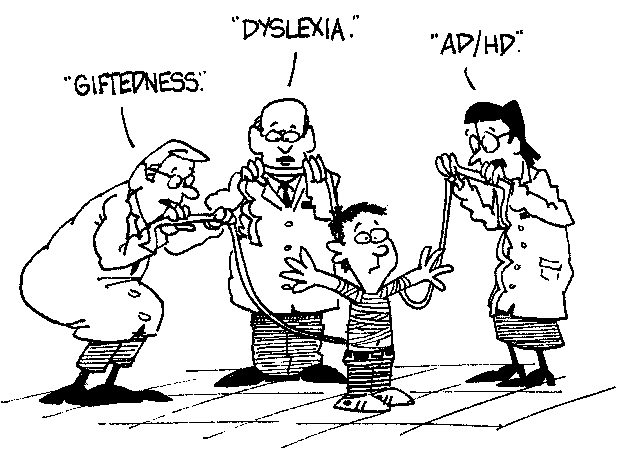
Some have called it the modern-day disease, others call it the age of electronics.  Vaccinations have been blamed, Camel's milk has been recommended... Different names have been given including: ADHD, Attention Deficit Hyperactivity Disorder, ADD, AD/HD...


How many of you have heard of either or all of these acronyms/names?

I am not writing a post about all the details related to Attention Deficit Hyperactivity Disorder (ADHD)... at least not tonight.  I would rather have us all think about what it actually means, and I hope to start breaking down the stigma associated with this particular learning difference.  If you are interested to learn more, please look at the listed links at the bottom of the post.
First of all, I would like us to look at each individual component of the name:  Attention, Deficit, Hyperactivity, Disorder.  If we take each word as a piece of the challenge, we then need try to overcome that challenge by presenting a solution.  This is my view of what the solution should be like:

A─ ATTENTION                →→→→→→                  ENGAGE & STIMULATE
D─ DEFICIT                       →→→→→→→                 FEED BODY & MIND 
H─ HYPERACTIVE         →→→→→→→                  RELEASE & REGULATE
D─ DISORDER                  →→→→→→→                  ORGANIZE & STRUCTURE

Attention:  A child or adult with ADHD would benefit greatly from understanding what their learning style is, and by being engaged using multiple modalities and ways.  As a parent, teacher or professional, one must help the child maintain attention by providing information visually, verbally and actively/concretely.

Deficit:  As I have mentioned in previous posts, I am not a fan of complete elimination diets nor haphazard prescriptions (whether it is drugs or supplements).  The process of dealing with ADHD, is usually a process of trial and error.  We must try, through eliminations and inclusions to see what works best for our child.  Always do full medical check-ups to see if your child has any medical conditions and any allergies/intolerances.  After that we can start with decreasing the child's intake of unhealthy food habits (sweets, fried food, etc), increasing activity level, providing structure, educating ourselves and the child about the challenges, and also thinking about medication options. 

Hyperactivity:  It is critical to engage in physical activity.  It is not only a release, but it is also vital that the person with ADHD has a positive attitude about his activity.  S/he can be a great athlete, dancer, performer, and does not have to always be punished or criticized for his/her energy.

Disorder:  Incorporate structure, discipline and routine into your life.  Reminders are key!.  Have visual reminders of the house/classroom rules and explain consequences to actions.  Be a role-model yourself.  Help your child organize his space, thoughts and actions.

I hope that by providing this small amount of information we can start thinking together about what ADHD really means.  If you suspect that your child may be struggling, follow-up by having him/her assessed, and start teaching yourself about ADHD.  You can also contact professionals in the field to help you through this process, as many parents request parenting skills training.

Please take the time to listen to the following stories: (ADHD- stories link)
"Patient Voices", is a multimedia aspect of the New York Times that provides real-life stories of people who share a common  medical or psychological condition.  It is an EXCELLENT resource. 

For more information here are some recommended websites:

For local support options:
  • CCET:  Call 1832000 for the national hotline provided by CCET! (working hours are 7am-5pm Sunday- Thursday).  CCET also houses a brilliant library with updated books about learning difficulties/differences.
  • KALD: A great resource in Kuwait.
  • Soor Center-  Call in for a consultation should you have any questions and concerns about assessments, parent-training and therapy.

Thursday, September 8, 2011

Disciplined... Part 1


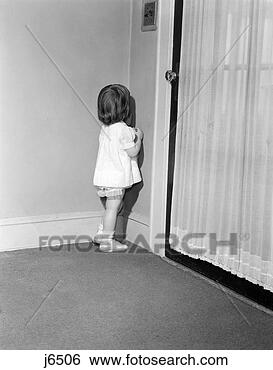
Structure is an essential part of a child's development.  It allows the child to have a sense of predictability and stability which nurtures his sense of security.  Rewards and punishments teach the child about consequences of actions, allowing the child to act after consideration rather than impulsively. Establishing rules and guidelines may be difficult in the beginning, and here are some tips about one aspect of discipline:

Rewards

Rewards should be immediate.  A reward far off in the future is neither enticing nor motivating.  Children can tolerate and should tolerate waiting, but creating a token system for a future reward is more effective than a verbal promise. (i.e. collecting point, stickers, etc).

For younger children explain very clearly why the reward was given, the more specific you are, the more likely it is that the child will repeat that specific behavior.

Do not assume the child has not learned if s/he does not repeat the rewarded behavior.  Consistency, repetition and persistence are essential, especially when dealing with special needs children.

Use one-on-one rewards when targeting embarrassing or personal goals. (i.e. age inappropriate toilet training, hygiene, relationship problems).   

Try to be creative with your rewards.  Find activities and experiences that you can reward with, rather than focusing on materialistic rewards. For example, 15 minutes of one-on-one play with your child (a game of their choice), allowing them choose their favorite dish for dinner, bake cookies, or make popcorn and watch T.V. together.  For bigger rewards, these could include organizing an outing, having friends over, or allowing them extra privileges.    

Express your love and pride for your child generously