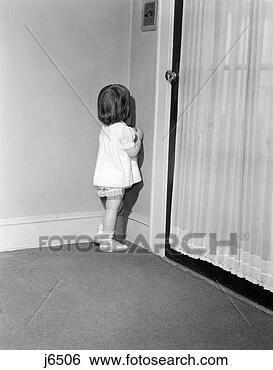
Showing posts with label discipline. Show all posts

Monday, January 16, 2012

Charts, lists, and routines...oh my!

All parents feel overwhelmed at one point or another.  Being organized and structured can help tremendously, but what does that really mean?

  • Well... you can start with introducing yourselves to a calendar.  Electronic, paper, or memory based (I would really discourage using the latter) can work.  Parents often tell me their kids have a busier calendar than they do.  By being organized you can make sure you keep your kids schedules intact, and make sure you have time set aside for your self as well.  You may use an actual calendar, or something more child specific like the one below, which was shown in Oleana's blog.  
Calendars, if paper-based or written on a board, should be in an area where all the family can see it, like the kitchen or living room.  
Check out Oleana's post about these great printables
  • The second item that helps with organization is creating a daily routine for your children.  Using visual charts for young children, or children with special needs, is usually VERY helpful.  I often encourage parents to do it as a family project.  Take pictures of your child doing the behavior/activity, and then stack the pictures up or across according to time.  If you are unable to do it, use the available printable charts like the one below, which was also shown in Oleana's blog.  These will usually be for basic routines, not a full day schedule.  

Routine charts are best kept in your child's room.
  • The third item on the list would be to create a list of house rules.  This not only teaches your children discipline, but it also allows for understandable and clear guidelines for you as a parent of when and how to punish.  See my two posts about discipline to learn more about rewards and punishments (Disciplined 1, Disciplined 2)
Rules charts should be in the living room and/or play area.

  • A fourth item on our organization list is the "reward chart".  This is saved up for behaviors you would like to encourage and nurture in your children.  Do NOT punish a child when s/he does not do the behaviors on this list, but reward them when they do.  This chart aims to motivate your child, it is not intended as another list of rules.  I would usually encourage using two behaviors at a time for a period of 3-4 weeks.  Once these behaviors are mastered, you can substitute with two new behaviors.  The chart can also be done by using pictures of your child doing the goal/behavior.  
You may choose to have an actual big chart such as the one below, or keep a notepad with you and you can add stickers or happy faces to it, as in not to overwhelm your house with charts:)

Let's get organized!


Wednesday, December 28, 2011

No?


Two weeks ago, I was asked about the right time to say "no" to a child.  Most recent opinions about this seem to suggest that delaying saying "no" has many benefits, most importantly providing a positive and nurturing environment for the child.  This is certainly something to think about.  I, however, do think that saying "no" will not have any detrimental effects on the child's upbringing even at an early age.  In fact it can be useful.  We have to keep in mind that is it CRITICAL to give children an alternatives as often as possible, and use "no" when it is regarding something potentially dangerous/serious.  For example, if your child is playing with your phone, we can simply redirect him by saying "This is mummy's not yours, but here's your toy, while you hand your child something that belongs to him.  If the child was trying to touch the fire/heater, saying "no" is appropriate.  Explain why whenever possible.

When we are talking about parenting, we very often have to also talk about reality and practicality and not just ideals.  Does that mean we are not providing our very best? Not at all!
Your young child would have heard "no" from you or others even if it not directed at him/her.  Furthermore, in interactions with other adults, your child may have been told "no" directly.  Thinking about cognition and the development of linguistic awareness, it makes more sense that we associate from an early age a relationship between the word "no" and its meaning.  Children thrive within a structure and within a predictable environment, and some limitations are necessary.

Allowing the child to hear the word "no", will also teach the child about assertiveness.  You would have taught your own child how to express his disdain or refusal.  I can probably hear some "oh no's" from you readers right now, but again, an expressive child will be more successful and independent than a non-expressive child.  When children start saying "no" this is the ideal time to teach them about choices and consequences.


Do you remember our earlier post about discipline (here)?  Remember that video of the boy during the tantrum?.  These types of tantrums can be seen in very young children; even younger than the expected "terrible twos" stage.  When structure is in place and some rules are implemented, the tantrums can be dealt with more efficiently.

So what is our summary?

  • Saying "no" can be beneficial.  It builds structure and differentiates between dangerous and non dangerous behavior.
  • Saying "no" also provides children with predictability, which makes them feel safe.
  • Try to give alternatives whenever possible instead of "no" for very young children.
  • For older children: Keep giving alternatives and show your child how to correct their own mistakes.
  • Saying "no" teaches children about assertiveness and allows them to express negative emotions.
  • Give children choices and teach them about consequences.

Monday, October 3, 2011

A splash of yoga in your coffee?


This morning, I woke up excited that I was finally able to do Yoga again!  Not only do I do it for myself, but it always gives me new ideas to try to use in my therapy sessions.


Yoga with kids can have many benefits.  I am basing this post on personal experience rather than any scientific or educational background.  Children, especially younger ones, tend to learn more concrete facts, and are able to remember and implement behaviors that have been modeled for them.  Aside from the many health benefits to yoga, it can be an effective tool to teach children about discipline, impulse control and mastery of their body.  For the sake of simplification, I will divide three different aspects of yoga and explain some of the benefits for each.  Again, this is very simplified, and you can find many more benefits to yoga.    


  • Meditation: a short and relaxed period of looking at an object of your choice (i.e. candle with a child that is not too active or oppositional), to teach kids about focusing and controlling impulses.  It can be used as a gateway into what the child is preoccupied with, and what s/he is thinking.  Meditation also helps increase concentration and attention.


  • Deep breathing: Deep breathing can be used to teach kids about psychosomatic symptoms.  For example, "when we are afraid or very angry, our heart beats super fast! But we can calm our heart when we do this trick...": have the child sit down and relax then do 10-20 repetitions of deep breathing.  When the child realizes that through the breathing his/her heart did slow down, they feel empowered and encouraged to try self-calming methods.  Deep breathing is also inherently relaxing, so for your older and anxious/stressed child, it will be very helpful.


  • Yoga poses:  The idea behind it is mastering control over your body, which helps all children in general become more aware, and thus more able to express themselves.  It also decreases impulsivity, and teaches discipline.  It can help with adjusting posture, and with older children, can teach them about body language (how to look confident, for example).


Let's get active and reflective


Monday, September 12, 2011

To fight or not to fight?


One of my favorite health blogs, is National Public Radio's (NPR) blog,  SHOTS.  An article entitled "Pediatricians Put The Kibosh On Boxing", caught my attention.  It explained the dangers of boxing as a sport for kids.  The writer noted:

Citing the risk of injuries, including concussions, the American Academy of Pediatrics and its Canadian counterpart, the Canadian Paedeatric Society, have come out in opposition to boxing as a sport for children and adolescents.  Pediatricians should strongly discourage parents from letting their kids box and suggest sports "that do not encourage intentional head injuries," says a new policy statement from the two national groups for pediatricians. (link)


One might wonder, does that mean all combat sports are bad?  

There is never a right or wrong answer because these things are relative; it depends on how the sport is taught, which combat sport it is, what the child is like (aggressive vs. calm), the child's age, the guidelines established at home, the instructor's methods, etc.  I would argue, however, that the critical point here is intent.  Sports like taekwondo and Karate are fighting/combat sports, but many instructors focus on the self-discipline aspect, and do not encourage fighting aimlessly.  Boxing and wrestling, at least in my eyes, seem to carry the intent to harm, and children watching and practicing these sports, tend to act-out the sport more often. 
There is merit to some of these combat sports.  Children can build strong self-esteem and courage based on the experience.  With martial arts, many instructors focus on discipline, and an understanding of the body and mind.  They teach children to think before they act.  But the fact remains that it is a form of fighting, and some children are encouraged to rough play at home with their siblings and sometimes fathers.  Without proper guidelines, these children may transfer these lessons to the schoolyard and classroom. 


What are your experiences?  


Saturday, September 10, 2011

Disciplined... Part 2

Misbehavior, rule breaking and/or tantrums are an inevitable part of growing up. Sometimes it is an attempt (by the child) at gaining control; an attempt at mastery. Other times it is an experiment of "what will mama/baba do".  This can be intentional, as we can see from the video below, or not.  This post is targeting intentional and repetitive attempts by your child to misbehave.

With teenagers it is no different. They may not lie down on the floor and scream, but they still seek attention, experiment with breaking the rules, and seek ways of expressing that they have grown, and that rules may need to change.  This might be a time when renegotiating the rules is helpful.

As aforementioned in the previous post, structure and discipline are necessary. Discipline is not just about rewards, nor is it only about punishments. We need to start with having a set of rules and guidelines for our children to follow, we then need to be role models. For younger children these rules have to be short and clear; and we need to keep a reminder of these rules.  We should remember to use positive reinforcement when our children are doing well. When they are not, we give chances (or warnings) to allow them to correct their mistakes. If our child is being stubborn, we use punishments, or as I would rather say, consequences to teach them discipline. (I will use punishment in this post because it is more familiar and recognizable).


Punishments/ consequences:

  • Punishments, like rewards, need to be immediate. (i.e. Do not punish a behavior exhibited at the beginning of the week, by taking away something on the weekend).  This can be an exception with teenagers, who are able to wait and you may postpone a punishment.
  • Punishments need to be short. Elongating punishment will only decrease its effectiveness. (i.e. take away the game for an hour instead of a week).
  • Punishments need to be age-appropriate. (i.e. Time-out for younger kids vs taking away privileges for older children).  Please use the term "thinking chair" instead of "naughty chair".  Remember we are trying to promote positive thinking and behavior.
  • Talk to your child not at your child.  Try to kneel down and maintain eye contact.
  • Clarify that you are punishing the behavior and not the child.  Show your child love even in those tough moments.
  • For educational, safety and emotional reasons I will have to mention that I am adamantly against corporal punishment (physical punishment).  This is always a sensitive topic, especially in this part of the world.  As the cartoon below shows, it only teaches the child to be aggressive, and to avoid an act out of fear, and not conviction).
Corporal Punishment


·
      This video might make you laugh, break your heart, or allow you to sigh and say "yippee! Its not only my boy who does that!"...  It does, however, show us that intentional and manipulative behavior starts at a very young age.

Thursday, September 8, 2011

Disciplined... Part 1


Structure is an essential part of a child's development.  It allows the child to have a sense of predictability and stability which nurtures his sense of security.  Rewards and punishments teach the child about consequences of actions, allowing the child to act after consideration rather than impulsively. Establishing rules and guidelines may be difficult in the beginning, and here are some tips about one aspect of discipline:

Rewards

Rewards should be immediate.  A reward far off in the future is neither enticing nor motivating.  Children can tolerate and should tolerate waiting, but creating a token system for a future reward is more effective than a verbal promise. (i.e. collecting point, stickers, etc).

For younger children explain very clearly why the reward was given, the more specific you are, the more likely it is that the child will repeat that specific behavior.

Do not assume the child has not learned if s/he does not repeat the rewarded behavior.  Consistency, repetition and persistence are essential, especially when dealing with special needs children.

Use one-on-one rewards when targeting embarrassing or personal goals. (i.e. age inappropriate toilet training, hygiene, relationship problems).   

Try to be creative with your rewards.  Find activities and experiences that you can reward with, rather than focusing on materialistic rewards. For example, 15 minutes of one-on-one play with your child (a game of their choice), allowing them choose their favorite dish for dinner, bake cookies, or make popcorn and watch T.V. together.  For bigger rewards, these could include organizing an outing, having friends over, or allowing them extra privileges.    

Express your love and pride for your child generously