Friday, December 30, 2011

Preventative Means

Watching morning T.V., a beloved past-time of mine on friday morning, I heard about some controversial new advertisements targeting the use of Meth (Methamphetamine Drugs).  Darren Aronofsky, from the movie "The Black Swan", directed several of the Meth Project Foundation ads, and I must say they are VERY graphic.


The Meth Project Foundation was established by businessman Thomas M. Siebel in 2005 in response to the growing Meth epidemic in the U.S.  The Meth Project is a large-scale prevention program aimed at reducing Meth use through public service messaging, public policy, and community outreach. Central to the program is a research-based marketing campaign and community action programs designed to communicate the risks of Meth use.  The Meth Project is funded by a grant from the Thomas and Stacey Siebel Foundation.


These scare tactics and threats do not usually work on current drug users.  The ads motto, "Not even once", aims to target potential users rather than current users..  The ads are very well done, very shocking and unforgiving.  I debated whether or not to embed one of the videos here, but I decided against it because of its graphic nature.  I do, however, encourage you to search on YouTube and tell me what you think.

Wednesday, December 28, 2011

No?


Two weeks ago, I was asked about the right time to say "no" to a child.  Most recent opinions about this seem to suggest that delaying saying "no" has many benefits, most importantly providing a positive and nurturing environment for the child.  This is certainly something to think about.  I, however, do think that saying "no" will not have any detrimental effects on the child's upbringing even at an early age.  In fact it can be useful.  We have to keep in mind that is it CRITICAL to give children an alternatives as often as possible, and use "no" when it is regarding something potentially dangerous/serious.  For example, if your child is playing with your phone, we can simply redirect him by saying "This is mummy's not yours, but here's your toy, while you hand your child something that belongs to him.  If the child was trying to touch the fire/heater, saying "no" is appropriate.  Explain why whenever possible.

When we are talking about parenting, we very often have to also talk about reality and practicality and not just ideals.  Does that mean we are not providing our very best? Not at all!
Your young child would have heard "no" from you or others even if it not directed at him/her.  Furthermore, in interactions with other adults, your child may have been told "no" directly.  Thinking about cognition and the development of linguistic awareness, it makes more sense that we associate from an early age a relationship between the word "no" and its meaning.  Children thrive within a structure and within a predictable environment, and some limitations are necessary.

Allowing the child to hear the word "no", will also teach the child about assertiveness.  You would have taught your own child how to express his disdain or refusal.  I can probably hear some "oh no's" from you readers right now, but again, an expressive child will be more successful and independent than a non-expressive child.  When children start saying "no" this is the ideal time to teach them about choices and consequences.


Do you remember our earlier post about discipline (here)?  Remember that video of the boy during the tantrum?.  These types of tantrums can be seen in very young children; even younger than the expected "terrible twos" stage.  When structure is in place and some rules are implemented, the tantrums can be dealt with more efficiently.

So what is our summary?

  • Saying "no" can be beneficial.  It builds structure and differentiates between dangerous and non dangerous behavior.
  • Saying "no" also provides children with predictability, which makes them feel safe.
  • Try to give alternatives whenever possible instead of "no" for very young children.
  • For older children: Keep giving alternatives and show your child how to correct their own mistakes.
  • Saying "no" teaches children about assertiveness and allows them to express negative emotions.
  • Give children choices and teach them about consequences.

Saturday, December 24, 2011

Holiday Reflection...


As the New Year approaches and the festivities of the holidays commence, many of us start thinking about the past year…. The difficulties, surprises and pleasures we have had.  Some of us make lists and others resolutions.  It is important to reflect and deflect in any way you find useful.  Dr. Marilyn Price-Mitchell suggested in an article in Psychology Today that parents keep these two resolutions:
  1.      Be a positive role-model
  2.      Help my kids believe in themselves

What wonderful resolutions! They are not easy, and they are not straight forward, but they are very important.  To help you with these resolutions, I ask you to think about your own experiences this year, as an individual and as a family.  Learn from the mistakes, and celebrate the successes… Think about the important things (including people, events, activities, etc) in your life, and how much time and love you dedicate to these things.  Remind yourself and others around you that you deserve love and deserve to be happy.  Believe in your self and your children will follow...  Feel positive about your life and the positivity will transcend to your family...

Here is a song which is perfect for our little post today…


This holiday season I wish you all Love…

Sunday, December 18, 2011

Eating your way to health

After checking Oleana Blog's post about our government school lunches (which look horrible!), I remembered the REMARKABLE project that Chef Jamie Oliver headed both in the U.K and U.S.A. to change school lunches. Because of his efforts, he was the 2010 TED Prize Winner. His speech was touching, inspirational and educational. Please take the time to see the whole video... I know it's quiet long.  Kuwait's population struggles immensely with very high rates of obesity and diet related diseases.

Several of our earlier posts have been dedicated to the cause (see our September entry)


Saturday, December 17, 2011

Adoption Read-y

Recently I posted about a very important but often undiscussed issue: Adoption.  After consulting with Om Wahabi, a wonderful mother of two gorgeous adopted children, I provide you with her recommended reading list...  I also encourage those of you who are interested in knowing more about adoption locally to check out "Special Mothers" page on Facebook.

Please do feel free to share your own experiences and suggested reading...

1. Found , Jennifer Lauck
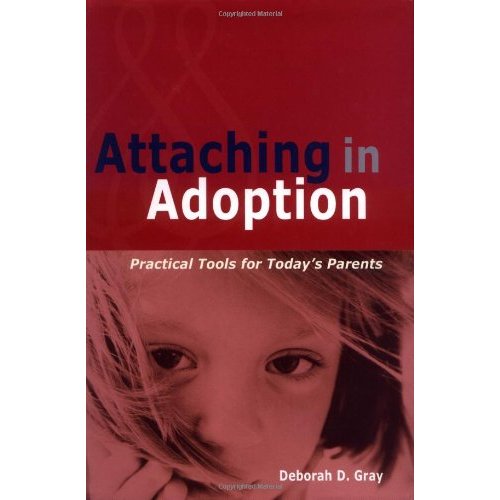
2. Attaching in adoption, Deborah D. Gray
3. The Primal Wound, Nancy Newton Verrier
4. 20 Things Adoptive Parents Need to Succeed, Sherrie Eldridge
5. Making Sense of Adoption, Lois Ruskai Melina
6. Twice born, Betty Jean Lifton


Found , by Jennifer Lauck

Attaching in adoption, by Deborah D. Gray


The Primal Wound, by Nancy Newton Verrier

20 Things Adoptive Parents Need to Succeed, by Sherrie Eldridge

Making Sense of Adoption, by Lois Ruskai Melina
Twice born, by Betty Jean Lifton


Wednesday, December 14, 2011

Marriage Survival 101


 A new post to share by Jennifer Ludden from the SHOTS blog...
To Keep Marriage Healthy When Baby Comes, Share House Work 

As many couples can attest — and lots of research backs this up — marital happiness plummets with the arrival of a baby. Sleepless nights, seemingly endless diaper changes and the avalanche of new chores that come with a newborn leave little time for the intimacies of marriage. It's a situation ripe for mental stress and marital discord.

In fact, the strain is so well documented that, as the Wall Street Journal reported earlier this year, a growing number of mental-health professionals now advise pre-emptive relationship counseling for expectant parents.

But in a survey of 2,870 married couples, the National Marriage Project of the University of Virginia found that more than a third of them buck the trend, managing to stay happy through the emotional, physical and financial strains of new parenthood. So, how do they do it?

Not surprisingly, the report finds sexual satisfaction and a sense of commitment top the list of traits that lead husbands and wives to say they are "very happy" in marriage. No. 3 is "generosity," defined as:


"the virtue of giving good things to [one's spouse] freely and abundantly," and encompasses small acts of service (e.g., making coffee for one's spouse in the morning), the expression of affection, displays of respect, and a willingness to "forgive him/her for mistakes and failings."

Further down the list: shared housework. That's right, both mothers and fathers are more likely to report they are "very happy" when housework is "shared equally." So presumably, asking your husband to do the laundry (or your wife to change the light bulb) can be good for your marriage. Though harking back to generosity, perhaps it's better if each volunteers to take on the task.

The survey is a joint project of the National Marriage Project and the Institute for American Values, conservative groups that promote marriage. Their report also finds — as many surveys have shown — that more devoutly religious people often rank themselves happier. Another recent study attributes this effect to the social networks that religion can foster.

Strikingly, the National Marriage Project finds a big jump in marital happiness among couples with four or more children (which, as the researchers note, is likely a pretty self-selecting group.)

Or, there's a simpler strategy: patience. Contrary to popular perception, evidence suggests marital bliss rebounds with the empty nest.

Sitting comfortably...


Did these car seats grab your attention? Are you expecting? Or is your little baby looking for a "big boy" seat?  


Click here to find out how you can get 10% off ALL of these wonderful Maxi-Cosi Seats from Just Kidding (Dubai).


Offer expires at the end of December... HURRY!